Having served as a property valuation expert witness in Kenya for nearly a decade, I have seen valuation disputes across every scale. My work has spanned from modest residential and commercial land cases worth a few million shillings to Kenya’s largest infrastructure developments, including Phases 1 and 2 of the Standard Gauge Railway (SGR) project valued in the multi-billions.
I have appeared in High Court proceedings where the defence counsel was a solo practitioner, as well as complex multi-party matters featuring over 20 lawyers representing different parties. In some instances, the accused persons have been fellow professional valuers—practitioners with decades of experience who simply found themselves entangled in the wrong transaction at the wrong time.
Through it all, I have always welcomed the rigor of cross-examination. One of my most flattering professional moments came after a particularly intensive session on the stand: the opposing defence lawyer approached me outside the courtroom to ask for my contact details so I could defend his clients in future proceedings. He had seen the precision, objectivity, and depth of analysis I brought to my evidence. He recently reached out with a matter that my team at Valuer Kariuki and Company will give our best, as we always do!
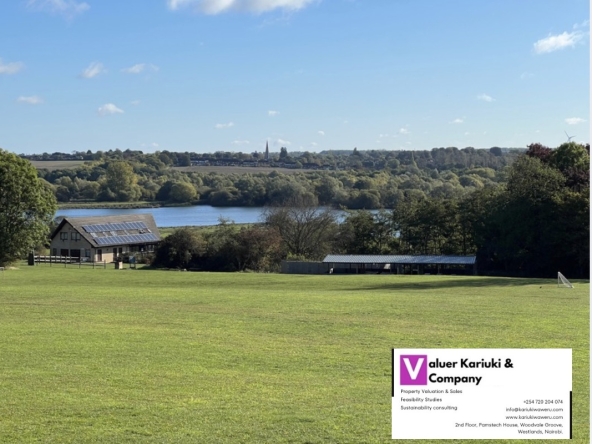
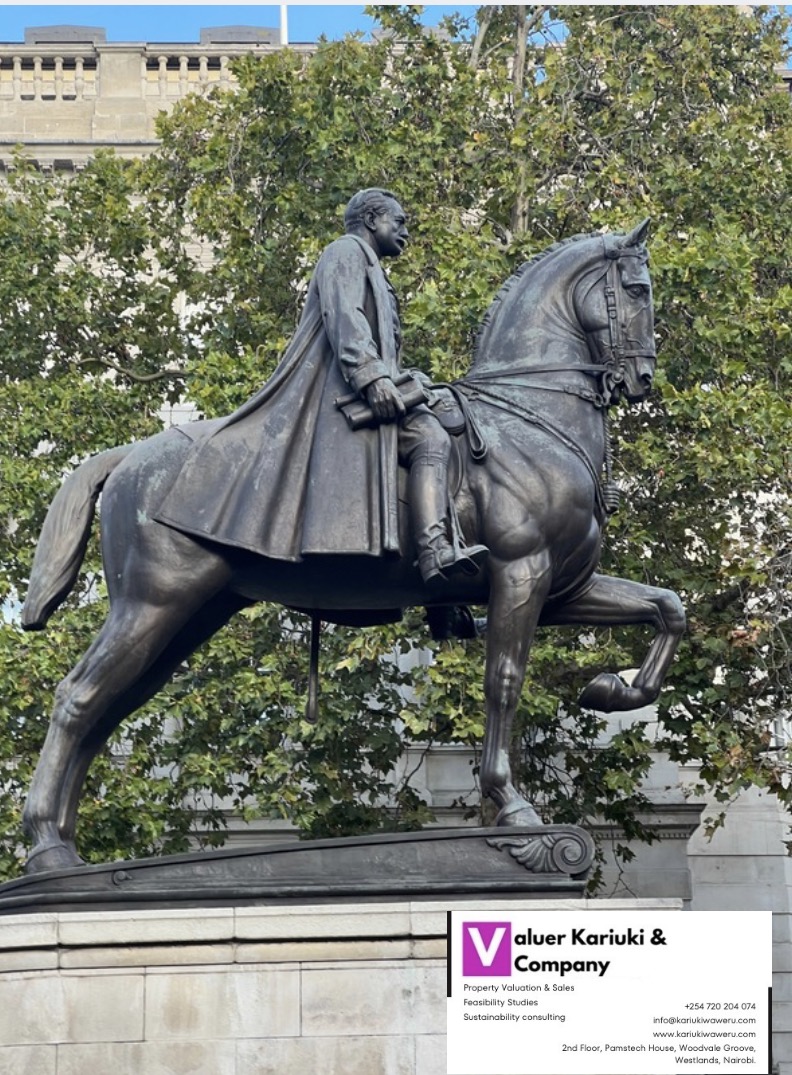
In October 2026, I attended an international Alternative Dispute Resolution (ADR) conference in Westminster, Central London. The event convened leading dispute resolution practitioners from the UK, the US, the Middle East, and China.
Reflecting on the discussions in London alongside my practice in Kenyan courts, here are six fundamental insights into the modern role of a property valuation expert witness.
1. The Expert’s Role Has Shifted Toward Mass Document Analysis
Modern litigation and arbitration involve unprecedented volumes of documentation. A key duty of the expert witness today is shifting through vast amounts of records to separate material facts from noise and hot air.
In one major Kenyan land dispute, I was tasked with examining a list containing hundreds of land parcels alongside extensive documentation for each parcel to determine which valuations were fraudulent and which were sound. Dissecting complex transactional histories requires methodical rigor—it is often like searching for a needle in a haystack, but it is critical to establishing clarity for the court.
2. Early Collaboration with the Legal Team Highlights Case Strengths and Weaknesses
An expert witness must work closely with the instructing legal team from an early stage. Beyond substantiating the client’s position, the expert’s crucial responsibility is identifying potential vulnerabilities, assumptions, or gaps in the valuation evidence. Flagging these weaknesses privately allows advocates to navigate the legal terrain strategically before taking the matter to trial or tribunal.
3. The Paramount Duty Is to the Court or Tribunal
Regardless of who retains or pays the expert witness, the expert’s primary duty is to the court, arbitrator, or tribunal. The goal is not to confuse the panel with dense industry jargon, but to explain complex valuation concepts clearly so the decision-maker can reach an informed judgment. There is a common saying in expert evidence: if you cannot explain a concept simply, you do not understand it deeply enough.
4. Technical Excellence Does Not Automatically Guarantee a Good Expert Witness
A professional can be a brilliant surveyor or valuer in practice yet struggle on the witness stand. The role of an expert witness in a court or ADR proceeding is to present evidence persuasively, objectively, and authoritatively. The evidence must withstand severe scrutiny under cross-examination without collapsing under pressure.
5. Confidentiality Remains Absolute in ADR Proceedings
Alternative Dispute Resolution mechanisms—such as arbitration, mediation, and dispute boards—are bound by strict confidentiality. An expert witness must maintain strict professional discretion regarding all transactional data, party identities, and hearing details before, during, and after the proceedings.
6. Robustness Requires Unbiased Self-Examination
An expert witness must construct evidence with absolute objectivity. This requires stepping back to analyze the report from multiple perspectives, deliberately probing one’s own blind spots, assumptions, and potential biases. Evidence built on solid, peer-defensible market data, assumptions and special assumptions will always withstand scrutiny better than subjective opinions.
Establishing Credibility on the Stand
From my experience in Kenyan courts, an expert witness’s first task upon taking the stand is to explain why the court or tribunal should dedicate its valuable time to hearing their testimony.
Before delving into valuation methodology, the expert must clearly establish their credentials:
- Academic & Professional Qualifications: Recognized degrees and professional designations (such as Registered Valuer, RICS Registered Valuer etc).
- Regulatory Compliance: Active registration with statutory bodies, including the Valuers Registration Board (VRB) in Kenya and international registration with the Royal Institution of Chartered Surveyors (RICS).
- Institutional Membership: Active standing with professional bodies like the Institution of Surveyors of Kenya (ISK) and RICS.
- Direct Experience: Demonstrated experience handling valuation matters of similar nature, scope, and scale.
Establishing these foundations ensures the court receives the valuation report with the professional weight it requires.
Upcoming Posts in This Series
In upcoming posts, I will share further insights from the London ADR conference, covering:
- Dispute Boards in major infrastructure and construction projects.
- The strategic role of Party Representatives.
- Modern developments in Mediation for property disputes.
Need an Expert Valuation Witness for Litigation or Arbitration in Kenya?
If you are an advocate handling a land dispute, a corporate legal team preparing for arbitration, or an individual involved in property litigation or succession or divorce proceedings in Kenya, securing clear and defensible expert valuation evidence is critical.
Book a free 15-minute free no obligation consultation with Valuer Kariuki Waweru MRICS to discuss your specific valuation requirements, review the scope of your case, and determine the appropriate next steps for your legal proceedings.
Valuer Kariùki MRICS
Valuer Kariuki & Company
RICS Registered Valuers and EARB Registered Estate Agents
2nd Floor, Pamstech House, Woodvale Grove, Westlands, Nairobi.
Call / Whatsapp. +254720204074 info@kariukiwaweru.com